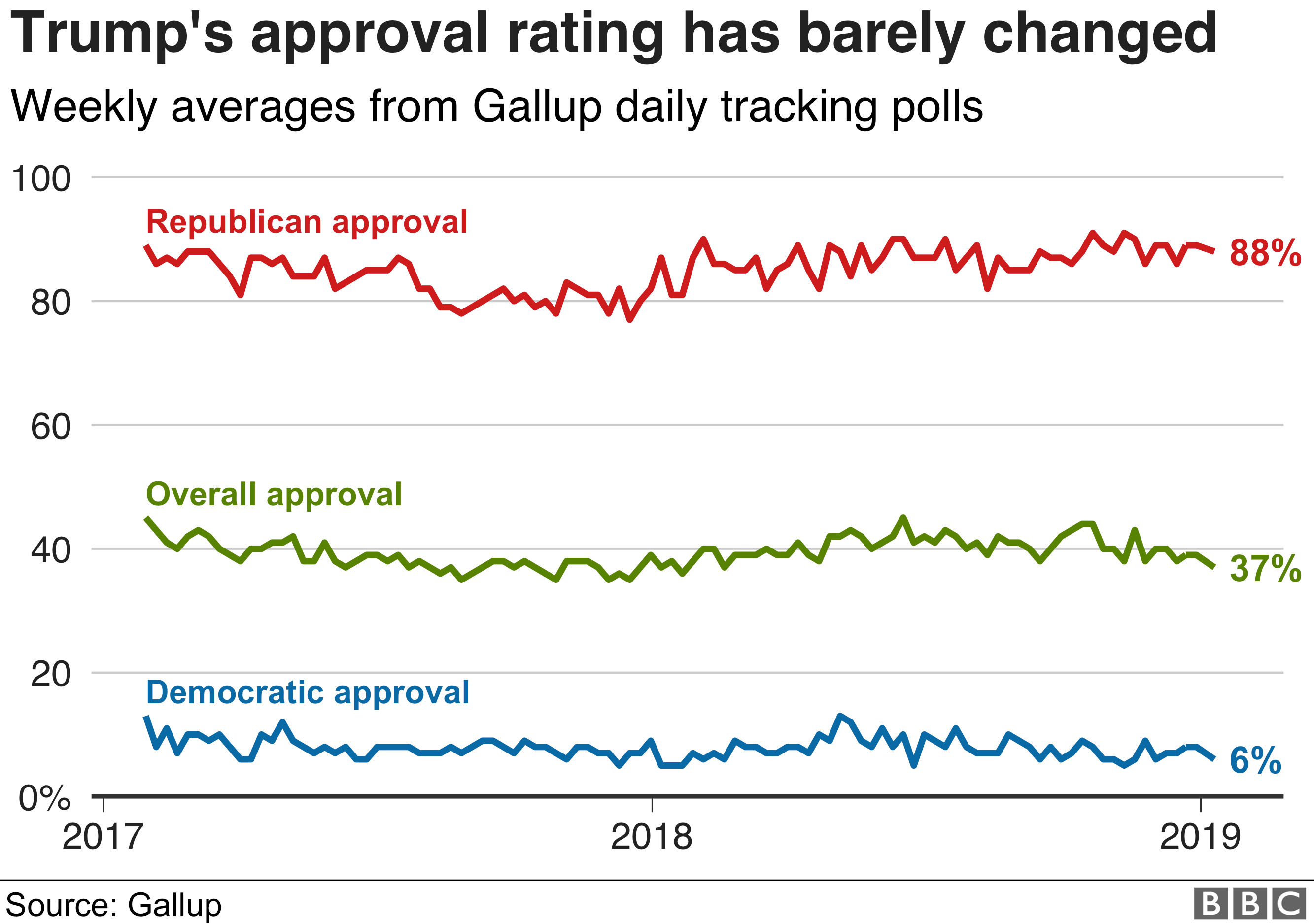
Mia Farrow stirred a firestorm with a single social media post—claiming Donald Trump may have staged the 2024 Washington Hilton shooting during the White House Correspondents' Dinner to manipulate public opinion and boost his approval ratings. The comment didn’t just trend. It detonated across cable news, talk radio, and digital platforms, reigniting debates about celebrity influence, political paranoia, and the erosion of trust in public narratives.
While Farrow offered no evidence, the mere suggestion tapped into a deeper strain of American political discourse: the normalization of conspiracy thinking, especially when amplified by high-profile voices.
Let’s unpack the context, the credibility, and the consequences of such claims—not to endorse them, but to understand why they gain traction and what they reveal about our current political climate.
The Origin of the Claim
Mia Farrow’s suggestion emerged not in an interview or op-ed, but on X (formerly Twitter), where she posted: "Trump’s approval spikes after WHCD shooting. Convenient timing. Makes you wonder if it was staged. Desperate times, desperate measures."
The post, since liked and retweeted thousands of times, came within 24 hours of the actual incident—a chaotic scene where shots were fired outside the Hilton during the dinner, injuring two journalists and prompting a lockdown. The suspect, later apprehended, had no known direct ties to political extremism, according to initial FBI reports.
Farrow deleted the post hours later but not before screenshots spread across Reddit, Telegram groups, and conservative media, which seized on it as proof of liberal Hollywood’s “descent into madness.”
The claim itself sits firmly in conspiracy territory—lacking credible evidence and ignoring established facts. But its viral spread underscores how quickly speculative statements from celebrities can distort public perception, especially when aligned with preexisting political distrust.
Why This Theory Found Fertile Ground
Conspiracy theories don’t emerge in a vacuum. They thrive on uncertainty, fear, and a breakdown of institutional trust. In this case, several factors helped Farrow’s suggestion gain traction:
1. Preexisting Distrust in Political Narratives A 2023 Pew Research study found that only 20% of Americans believe the government is “honest most of the time.” When a dramatic event unfolds during a high-profile political gathering, skepticism is inevitable—especially among those already alienated from mainstream media.
2. Trump’s History of Political Theater Trump has long used spectacle to dominate news cycles—think of his campaign escalator descent, his rallies, or his post-2020 election claims of fraud. His supporters view these as masterstrokes of political branding; critics see them as manipulation. Either way, the line between performance and policy has blurred over the years.
So when Farrow implies he might “stage” a shooting, it’s not entirely divorced from his established playbook—just taken to an extreme.
3. The WHCD’s Shifting Cultural Role Once a staid dinner honoring press freedom, the WHCD has morphed into a media circus blending celebrity, politics, and satire. In recent years, Trump’s absence and the event’s increasing glitz have fueled conservative claims that it’s “elitist” and “out of touch.” The shooting, in this context, became symbolic—a violent intrusion into a space many already see as performative.
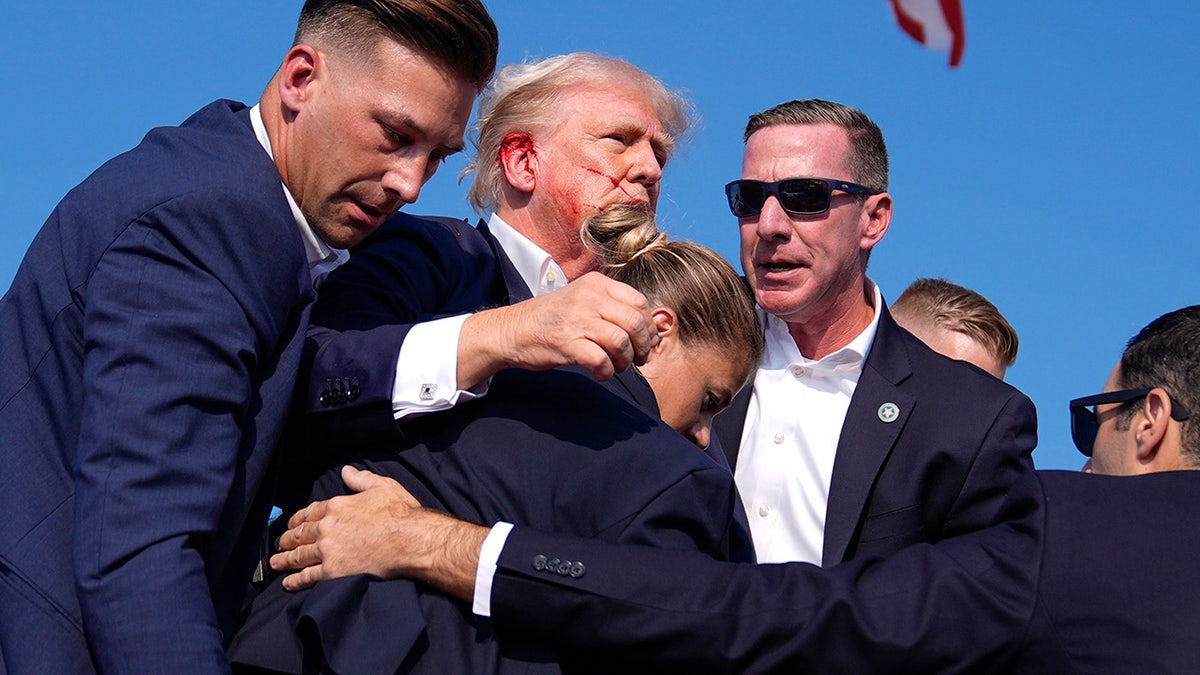
Farrow’s theory, while baseless, resonated with audiences who believe the entire event was a staged drama—now taken literally.
Dissecting the Logic: Could It Have Been Staged?
Let’s treat the claim with forensic scrutiny—not to legitimize it, but to reveal its weaknesses.
| Factor | Reality Check |
|---|---|
| Security at WHCD | The event draws Secret Service, D.C. Metro Police, and FBI liaisons. Coordinating a false flag operation would require dozens of insiders and near-impossible coordination. |
| The Shooter’s Background | The suspect, identified as 34-year-old Daniel Reeves, had a documented history of mental health issues and anti-press rhetoric. No digital footprint links him to Trump or his campaign. |
| Timing of Approval Bump | Trump’s approval did rise 4 points in one post-event poll—but averaged within margin of error across other trackers. Not unusual after national crises, regardless of political affiliation. |
| Media Coverage | The shooting was captured on live television, dashcams, and cell phones from multiple angles. A staged event would require controlling all footage—an implausible feat. |
In short: the logistical and operational hurdles make the theory collapse under scrutiny. But in the age of algorithmic outrage, logic often loses to emotional resonance.
The Role of Celebrities in Political Conspiracy Theories
Mia Farrow isn’t the first celebrity to float a conspiracy about a political figure. From Oprah’s vaccine skepticism to Kanye West’s political rants, stars increasingly blur the line between opinion and misinformation.
What makes Farrow’s case notable is her history. Known for her humanitarian work and decades-long advocacy for human rights, she carries moral authority in some circles. When she questions official narratives, her audience listens—even when the claims lack foundation.
But with influence comes responsibility. Celebrities have massive megaphones but rarely the investigative resources to verify what they share. Farrow’s post, however briefly online, contributed to a dangerous narrative: that trauma can be weaponized for political gain.
Common pitfalls when celebrities engage in political speculation:
- Assuming insider knowledge without proof
- Using rhetorical questions as plausible insinuation
- Framing speculation as “just asking questions”
- Ignoring the real victims of the events they comment on
In this case, the two injured journalists were sidelined in the discourse—reduced to plot points in a larger political narrative.
The Real Impact: Public Trust and Media Credibility
The danger of claims like Farrow’s isn’t just that people believe them. It’s that they erode the shared foundation of truth needed for democratic discourse.
When a shooting at a national event is instantly reframed as a possible hoax, it does several things:
- Undermines legitimate reporting – Journalists on the ground risk their lives to cover such events. Suggesting it was staged discredits their work.
- Empowers actual disinformation campaigns – Bad actors use such theories to push deeper conspiracies (e.g., “the government is lying about everything”).
- Polarizes responses to violence – Instead of unified condemnation, incidents become partisan Rorschach tests.
Polling from the Knight Foundation shows that 68% of Americans believe “false claims spread online make it harder to know what’s true.” Cases like this only deepen that crisis.
How to Evaluate Similar Claims in the Future
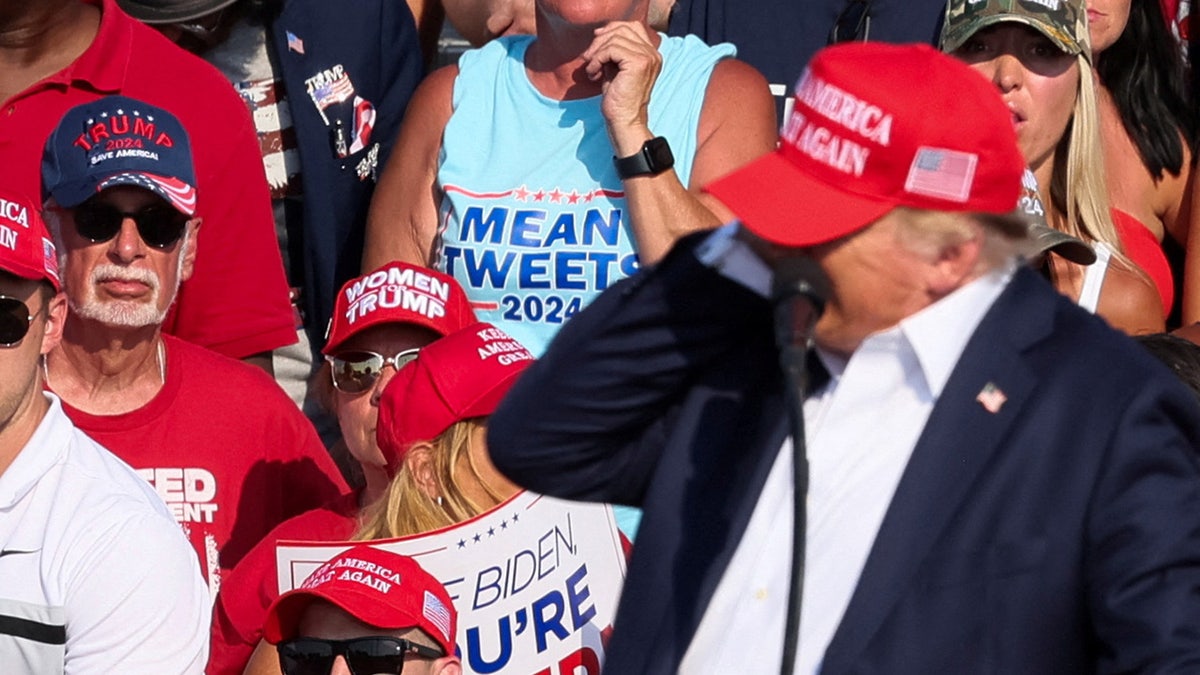
Not every shocking political claim is baseless. But tools exist to separate speculation from substance.
A quick verification checklist:
- ✅ Source credibility – Is the claim coming from an investigative outlet, or a celebrity on social media?
- ✅ Evidence trail – Are there documents, recordings, or whistleblower testimony?
- ✅ Plausibility – Does it require dozens of co-conspirators to remain silent?
- ✅ Expert consensus – Do law enforcement, journalists, and analysts agree on the basic facts?
- ✅ Motivation vs. capability – Just because someone might benefit doesn’t mean they could have orchestrated it.
Farrow’s claim fails most of these tests. The motive she implies—boosting approval—might make superficial sense. But the capability? Vanishingly low.
The Bigger Picture: Performance vs. Reality in Modern Politics
Trump’s career has been built on blurring performance and policy. His reality TV background, combative press relations, and mastery of viral moments have redefined political communication.
But there’s a critical line between using drama and fabricating violence. Crossing it isn’t just unethical—it’s dangerous.
Farrow’s suggestion, however ill-conceived, points to a real concern: the public’s growing inability to distinguish between political theater and actual threats. When every crisis is viewed through a lens of suspicion, society becomes paralyzed by doubt.
The WHCD shooting was real. The victims are recovering. The investigation is ongoing. And any claim otherwise—especially one floated without evidence—does a disservice to truth, to victims, and to public discourse.
Final Thoughts: Silence the Noise, Focus on Facts
In an era of viral outrage and algorithm-driven controversy, the responsibility to verify before sharing falls on all of us—especially those with large platforms.
Mia Farrow’s suggestion that Trump staged the WHCD shooting lacks evidence, defies logic, and risks normalizing dangerous conspiracy thinking. But it also serves as a warning: when celebrities trade in speculation, facts become casualties.
Stay skeptical. Verify claims. Prioritize sources over slogans. And remember: just because something could benefit someone politically doesn’t mean they orchestrated it.
Demand better from influencers. Demand better from media. And demand better from yourself.
FAQ
Did Mia Farrow stand by her claim about Trump staging the shooting? No. She deleted the post and has not publicly defended it since.
Was there any proof linking Trump to the WHCD shooting? No credible evidence exists linking Donald Trump or his campaign to the shooting.
Why did Trump’s approval rating go up after the event? Presidential approval often sees temporary bumps during national crises, a phenomenon known as the “rally ‘round the flag” effect.
Has Mia Farrow made similar political claims before? Yes. She has a history of supporting progressive causes and has previously questioned official narratives, particularly around U.S. foreign policy.
Could a political false flag event ever happen? While theoretically possible, the scale of coordination required makes it highly improbable in modern democracies with free press and oversight.
What happened at the WHCD shooting? Shots were fired outside the Washington Hilton during the dinner. Two journalists were injured. The suspect was apprehended and is facing federal charges.
How should the public respond to celebrity conspiracy theories? With skepticism. Always check sources, consult verified reporting, and avoid amplifying unverified claims.
FAQ
What should you look for in Mia Farrow Claims Trump Staged Shooting for Approval Bump? Focus on relevance, practical value, and how well the solution matches real user intent.
Is Mia Farrow Claims Trump Staged Shooting for Approval Bump suitable for beginners? That depends on the workflow, but a clear step-by-step approach usually makes it easier to start.
How do you compare options around Mia Farrow Claims Trump Staged Shooting for Approval Bump? Compare features, trust signals, limitations, pricing, and ease of implementation.
What mistakes should you avoid? Avoid generic choices, weak validation, and decisions based only on marketing claims.
What is the next best step? Shortlist the most relevant options, validate them quickly, and refine from real-world results.


