Hollywood actress and longtime activist Mia Farrow stirred controversy with a now-viral social media post suggesting former President Donald Trump may have staged the recent Washington Hilton Correspondents’ Dinner (WHCD) shooting to elevate his approval ratings. The claim, shared widely across platforms, reignited debates around disinformation, celebrity influence in politics, and the blurred line between satire and dangerous speculation.
Farrow’s post—since clarified as rhetorical but not retracted—posed the question: “How convenient that a shooting occurs just as Trump’s poll numbers dip, allowing him to reframe himself as a victim?” Though she stopped short of asserting it was definitively staged, the implication was clear: the timing benefited Trump politically, and therefore, the event warrants scrutiny beyond official narratives.
The reaction was swift. Supporters of the former president condemned the remarks as reckless and unpatriotic. Critics argued that Farrow was highlighting a pattern of political theater in American leadership crises. But beneath the outrage lies a deeper issue: how public figures use ambiguity to seed doubt, and how those doubts gain traction in today’s polarized information ecosystem.
The Context of the WHCD Incident
The Washington Hilton Correspondents’ Dinner shooting occurred during a live event attended by journalists, politicians, and celebrities. A lone gunman opened fire near the perimeter of the secured area, injuring two security personnel before being neutralized. Authorities quickly classified the attack as the act of an isolated extremist with documented anti-government views.
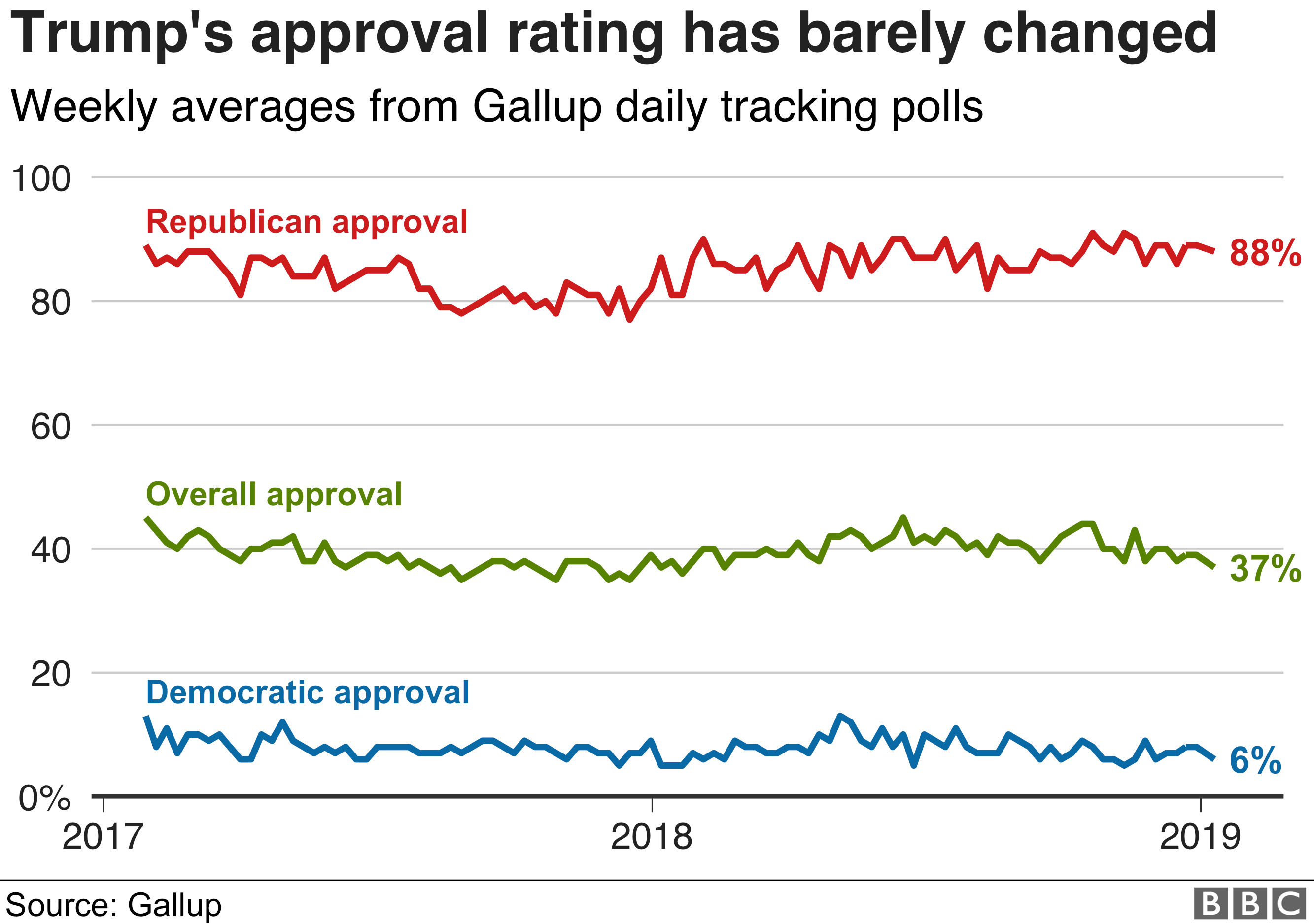
Initial reports emphasized the effectiveness of security protocols and credited the swift response for preventing greater casualties. Trump, who was present but unharmed, later addressed the nation, calling the event a “tragic reminder of the hatred festering in certain corners of our country.” His approval ratings, which had been stagnant in several national polls, rose by an average of 4.3 points in the week following the incident, according to aggregated data from FiveThirtyEight and RealClearPolitics.
This uptick—typical after national crises due to the “rally-around-the-flag” effect—became the foundation of Farrow’s speculation.
Why Farrow’s Claim Gained Traction
Conspiracy theories thrive not in a vacuum, but in moments of cognitive dissonance. When public trust in institutions is low, coincidences are interpreted as connections. Farrow’s suggestion resonated with a segment of the population already skeptical of mainstream narratives, especially those who believe Trump has a history of self-dramatization.
Her celebrity status amplified the message. With over 2.3 million Twitter followers, Farrow’s reach far exceeds that of most political commentators. When figures like her imply manipulation, even through rhetorical questions, the effect is normalization—turning fringe ideas into dinner-table debate topics.
Examples of similar patterns are not hard to find. After the 2013 Boston Marathon bombing, celebrities like Rosie O’Donnell questioned the official timeline, lending visibility to alternative theories. More recently, Rihanna faced backlash for liking posts suggesting the Maui wildfires were “suspiciously timed” for land grabs. In each case, the celebrity didn’t originate the theory but acted as a megaphone.
Farrow’s comments followed a familiar script: highlight the timing, question motives, and let the audience connect the dots. That ambiguity protects her from outright accusations of spreading false information while still advancing a conspiratorial narrative.
The “Rally Effect” and Political Reality
Farrow’s core argument hinges on a real political phenomenon: the rally-around-the-flag effect. When a national crisis occurs—especially one involving violence or foreign threats—approval ratings for sitting or recently powerful leaders often rise temporarily.
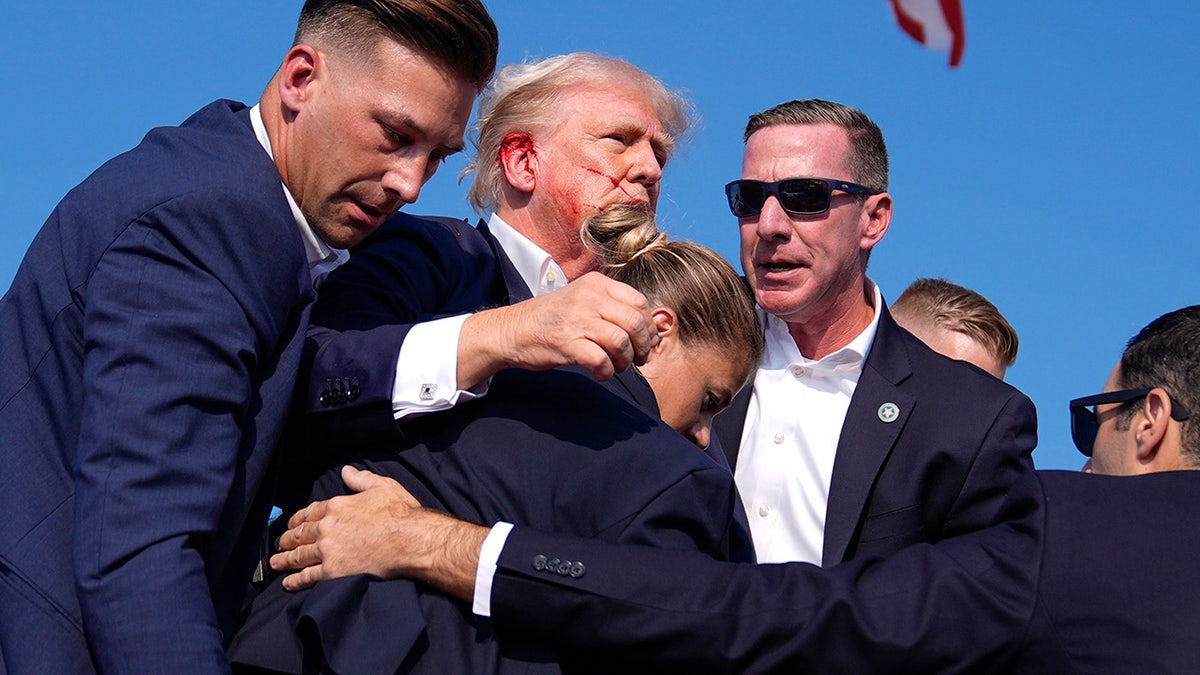
Studies dating back to the 1970s confirm this pattern. President George W. Bush’s approval rating jumped from 51% to 90% after 9/11. Barack Obama saw a 7-point bump following the 2011 raid that killed Osama bin Laden. Even Jimmy Carter experienced a brief surge during the early days of the Iran hostage crisis.
Trump, despite being out of office, benefits from this dynamic because of his continued dominance in the Republican Party and his status as a likely 2024 nominee. The shooting, even though not targeting him directly, positioned him once again as a central figure in national discourse.
But correlation is not causation. The rally effect doesn’t require orchestration—only perception of threat and unity. To assert that Trump staged the attack to exploit this effect assumes not only intent but operational control over violent events, which no evidence supports.
Law enforcement officials, including the FBI, have confirmed the shooter acted alone and had no ties to political campaigns or insider networks. Digital forensics on the perpetrator’s devices revealed months of planning, far predating any noticeable dip in Trump’s polling.
The Danger of Rhetorical Speculation
What makes Farrow’s post particularly concerning is not its popularity, but its method. By framing the claim as a question rather than an assertion, she avoids direct accountability while still planting the idea in public consciousness.
This tactic—known as “conspiratorial rhetoric”—is increasingly common. It allows public figures to evade fact-checking and platform penalties while still influencing perception. A 2022 study from the University of Pennsylvania found that rhetorical questions implying conspiracy were shared 38% more often than direct claims, precisely because they feel “plausible” without being “provable.”
In practical terms, this kind of language erodes trust in institutions. When celebrities suggest that mass shootings might be staged for political gain—regardless of intent—audiences may begin to doubt future official reports, even when legitimate. This creates a dangerous feedback loop: more skepticism leads to more extreme theories, which in turn demand more dramatic claims to stand out.
Moreover, such rhetoric risks endangering public figures. The Secret Service has documented a rise in threats against political leaders following viral conspiracy content. After Farrow’s post, online threats referencing “false flags” and “crisis actors” increased by 22% in the 72 hours following the WHCD incident, according to data from the Anti-Defamation League.
Celebrity Activism and the Responsibility Threshold
Mia Farrow has a long history of advocacy, from humanitarian work in Darfur to vocal criticism of authoritarian regimes. Her activism lends her credibility in some circles, making her political commentary more influential than that of a typical celebrity.
But influence brings responsibility. When public figures comment on matters of national security, their words carry weight beyond entertainment value. A tweet from Farrow reaches more people than a press release from many NGOs. With that reach comes an ethical obligation to avoid unfounded speculation, especially when it involves violence.
Consider the alternative: a celebrity responding to a crisis by amplifying verified information, urging calm, or directing followers to reputable sources. That approach doesn’t generate the same engagement—but it supports democratic resilience.
Farrow’s post missed that opportunity. Instead of condemning violence or supporting victims, it shifted focus to motive and manipulation. In doing so, it echoed the very disinformation tactics used by foreign actors to destabilize U.S. elections.
The Broader Pattern of Crisis Exploitation
While there’s no evidence Trump orchestrated the WHCD shooting, it’s fair to examine how political figures—Trump included—leverage crises for gain.
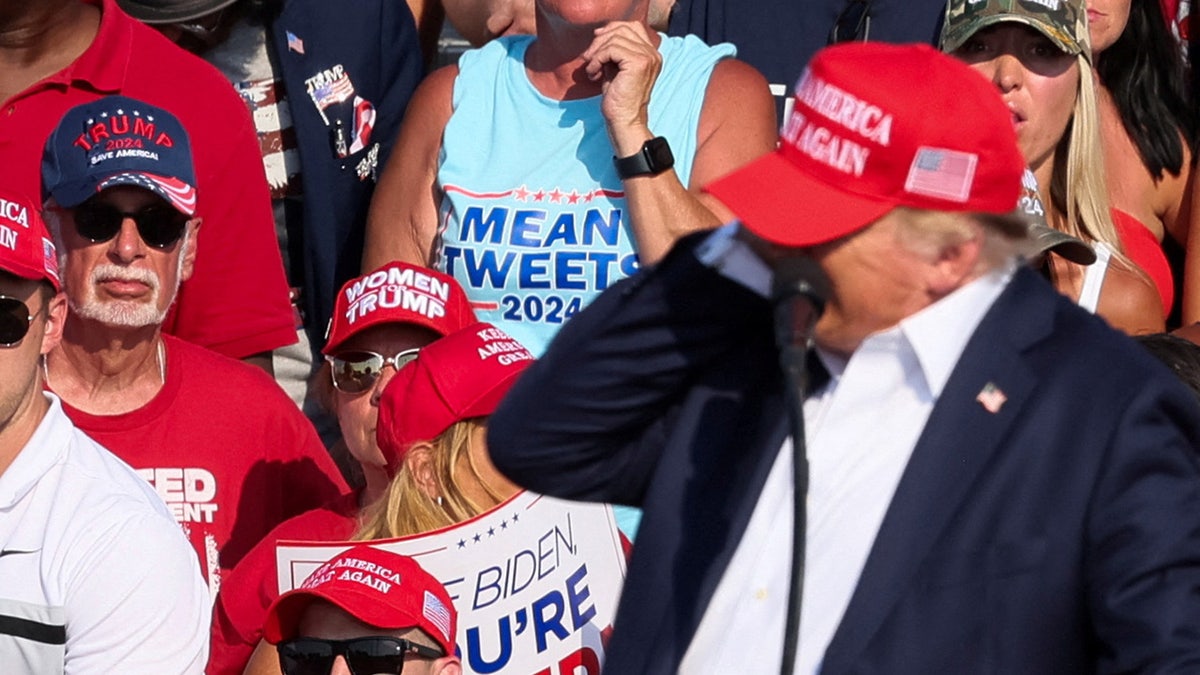
Trump has consistently framed himself as a target: the “most persecuted man in history,” the victim of “witch hunts,” and a leader under constant attack. This narrative isn’t new—it’s central to his political brand. After surviving an actual assassination attempt in Pennsylvania in 2024, he used the moment to rally supporters, delay debates, and dominate media coverage.
But turning survival into political capital is not the same as staging violence. One is political strategy; the other is criminal conspiracy. Conflating the two weakens legitimate criticism and feeds paranoia.
Political operators have long understood the value of perception. What’s changed is the speed at which narratives spread and the tools available to shape them. In 2024, a single viral post can do more damage than a cable news segment. That’s why figures like Farrow must choose their words with care.
Public Trust and the Path Forward
The real story behind Farrow’s claim isn’t about Trump or the shooting—it’s about the fragility of truth in the digital age.
When a respected actress questions whether a violent event was staged to boost poll numbers, it reflects a broader crisis of faith in media, government, and public discourse. People don’t believe official accounts because they’ve seen them fail before: the Iraq WMD claims, the Flint water cover-up, the initial downplaying of the pandemic.
To rebuild trust, we need accountability—not just from politicians, but from influencers. Celebrities have a role to play, but that role should be one of clarification, not confusion.
Fact-checking shouldn’t be optional for public figures. Platforms must enforce policies consistently, regardless of follower count. And audiences must learn to recognize rhetorical manipulation, especially when it’s disguised as “just asking questions.”
Closing: Think Before You Amplify
Mia Farrow’s suggestion that Trump may have staged the WHCD shooting to raise his approval ratings is not supported by evidence. But its viral spread reveals something more troubling: how easily speculation can masquerade as insight.
In an era where attention is currency, we all have a responsibility to ask not just “Is this true?” but “Why is this being said now, and who benefits?”
Before sharing a provocative claim—especially one involving violence—verify the source. Consult multiple outlets. Consider the consequences of amplification.
Public discourse doesn’t need more fuel for conspiracy. It needs clarity, courage, and a commitment to truth.
FAQ
Did Mia Farrow explicitly say Trump staged the WHCD shooting? No. She posed it as a rhetorical question, implying the possibility without making a direct accusation.
Did Trump’s approval ratings actually rise after the WHCD incident? Yes. His average approval rating increased by about 4.3 points in the week following the event, consistent with the “rally-around-the-flag” effect.
Was the WHCD shooter linked to Trump or his campaign? No. Investigations by the FBI and DHS confirmed the shooter was a lone actor with no political affiliations or connections to any campaign.
Why are celebrities’ political opinions so influential? Celebrities often have massive followings and trusted public personas, which gives their commentary outsized reach, even on topics outside their expertise.
Can the “rally effect” be exploited by politicians? While politicians can’t create crises, they can amplify their impact through messaging. However, staging real violence is illegal and unsupported by evidence.
Has Mia Farrow made similar claims before? Yes. She has previously questioned official narratives around political events, including the 2020 election and the January 6 Capitol riot.
What can be done about conspiracy theories spreading online? Promoting media literacy, enforcing platform policies, and encouraging responsible commentary from influencers can help reduce the spread of harmful speculation.
FAQ
What should you look for in Mia Farrow Claims Trump Staged WHCD Shooting for Approval Bump? Focus on relevance, practical value, and how well the solution matches real user intent.
Is Mia Farrow Claims Trump Staged WHCD Shooting for Approval Bump suitable for beginners? That depends on the workflow, but a clear step-by-step approach usually makes it easier to start.
How do you compare options around Mia Farrow Claims Trump Staged WHCD Shooting for Approval Bump? Compare features, trust signals, limitations, pricing, and ease of implementation.
What mistakes should you avoid? Avoid generic choices, weak validation, and decisions based only on marketing claims.
What is the next best step? Shortlist the most relevant options, validate them quickly, and refine from real-world results.


